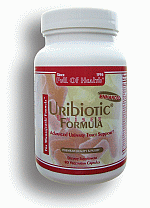















Win a free bottle of Uribiotic
Your feedback is important to us.
Please tell us what you like most about any of our UTI Products from your own experiences using them.
At the beginning of every month we will pick our favourite entry as the winner and publish it on this site.
In appreciation for your time, you will receive a free bottle of Uribiotic.
Click here for details
|
|
UTI Signs Symptoms |
UTI Causes Risk Factors |
UTI E. Coli |
UTI Catheters |
UTI Health Tips |
Uribiotic Testimonials
Urinary Tract Infection
Standard Antibiotic Treatments
Over 2.45 Million Antibiotic Prescriptions Each Year
From time to time, you may hear or read scientific reports allegedly showing that such-and-such vitamin or herb doesn't work or may even be harmful to your health.
They are a perfect example of the existing, and often uninformed, prejudice against nutritional supplements.
I sincerely hope that you do not believe in such anti-vitamin nonsense discouraging their use; and - most importantly - you won't allow these saboteurs distract you from achieving and maintaining your health through the natural means.
|
Urinary tract infection (or UTI for short) has become a major medical problem. Affecting over 13 million people each year in the United States alone, it is the most common infection in adult females (30:1 female:male ratio). In fact, it is a worldwide health problem.
This website is intended to help you - a bladder infection sufferer - become an informed patient who can manage her or his own care, ask the right questions, insist on adequate management and information, and seek an optimal health outcome.
Perhaps it will even help medical health professionals to appreciate and, hopefully, consider the nutritional and lifestyle-based approach as the alternative treatment option for urinary tract infections.
For important healthcare decisions, you need to stay alert, demand answers, and ultimately rely on yourself. I can only hope that by applying the outlined guidelines, you will be able to take better control of your urinary health, just as we all should do.
In the United States alone, each year 13 million people, mainly women, are given antibiotics for urinary tract infections.
Unfortunately, urinary tract infections are becoming increasingly hard to treat because of emerging resistance to current antibiotic drugs, experts warn. They say the problem is spawned by the overuse of antibiotics in the farming industry which enter the food chain. It is a worldwide problem, confirms professor Chris Thomas, an expert in bacteria at the University of Birmingham.
Typically, women with bladder infections - especially those who are prone to frequent recurrences - are offered:
- short courses (1 or 2 days) of antibiotics when symptoms appear,
- single doses of antibiotics after sexual intercourse,
- low doses of antibiotics for long periods of time, as long as 6 months to 2 years.
Usually, stronger antibiotics are given than for single, acute episodes of bladder infection. After acute symptoms have subsided, prophylactic, or preventive, therapy with low-dose antibiotics is recommended.
Besides antibiotics, normally employed in a trial and error fashion with varying degrees of success, medical treatments also include:
- antidepressants to effect a change in the bladder lining,
- water dilation of the bladder,
- surgery - up to (and including) bladder removal.
Doctors' Choices of Antibiotics
Individuals who receive antibiotic treatment of urinary tract infection develop antibiotic resistance, which is greatest in the first month but can persist for 12 months. Antibiotic resistance is linked with longer duration and multiple courses of antibiotics. (British Medical Journal, May 19, 2010)
|
As urinary tract infections are extremely common, particularly in women, doctors in the United States write 2.45 million antibiotic prescriptions to treat them each year.
Bactrim and Septra
Bactrim and Septra are both brand names for a combination antibiotic called trimethoprim-sulfamethoxazole.
Trimethoprim and sulfamethoxazole are both compounds that block the internal production of folic acid (folate) needed by most bacteria to survive. These compounds, relatively safe for humans, are lethal to many bacteria.
Unfortunately, this inexpensive and quite effective, standard antibiotic for bladder infections is notorious for developing rash and allergies to it, frequently, life-threatening allergies. It is one of those famous sulfur drugs to which people have adverse reactions.
Other side effects have been reported in virtually every organ system in the body, including the kidneys. Sulfa drugs may precipitate in the urine, producing crystals that can cause:
- bleeding,
- urinary obstruction, or
- kidney damage.
Septra also interacts with Dilantin, with methotrexate, and with anticoagulant medications. Therefore, it should be used cautiously if these other drugs are being taken.
Generic Bactrim also tends to disrupt the intestinal bacteria
more than other drugs, such as Macrobid, and cause stomach
upset.
Maybe for this reason, in the past 10 years, fewer doctors prescribe a 10-day course of generic Bactrim or Septra, recommended by the Infectious Disease Society of America.
Keflex and Macrodantin
These alternatives to Septra and Bactrim are commonly used both for the active treatment and long-term prevention of urinary tract infections. They seem to be more effective and even safer than Septra, although each carries risks of its own.
As you can see, in prescribing antibiotics, the risks and benefits must be always balanced!
Cipro and Marcrobid
The majority of doctors opt for newer (and more expensive) antibiotics, such as Cipro (a type of fluoroquinolone) or an often-prescribed drug, generic Marcrobid.
An often-prescribed by obstetricians generic Marcrobid tends to have minimal negative effect on the intestine, as most of this drug is concentrated in the bladder.
This trend may be due to doctors, adopting a new drug, believing it is the better drug. Therefore, it runs counter to the formal recommendations for drugs to be used first, such Bactrim, in the treatment of urinary tract infections.
There are also differences between the medical specialties in prescribing antibiotics:
- internists are most likely to prescribe fluoroquinolones, such as Cipro, and
- obstetricians are most likely to prescribe nitrofurantoin, such as Marcrobid.
However, all antibiotics for urinary tract infections are normally employed in a trial and error fashion with varying degrees of success.
Limitations of the Antibiotic Treatments
Unfortunately, uropathogenic bacteria can survive after antibiotic
treatment. For example, bladder infections caused by E. coli
return in as many as 30 percent of women apparently "cured" by
antibiotics.
E. coli bacteria are able to survive antibiotic treatment for bladder infections by reverting to an inactive state.
Although, within several days of drug treatment, the number of bacteria reproducing drop to zero - NOT ALL the E. coli bacteria
are killed.
For example, after treatment with ciprofloxacin (Cipro)
- about 3 percent of the bacteria may be still present in a dormant
state.
After treatment with trimethoprim-sulfamethoxazole (Bactrim/Septra)
- about 7 percent of the bacteria may still linger.
Even after a month of antibiotic exposure, about 10 million of the
original 1 billion bacteria may remain.
It is a well-known fact that antibiotic treatments:
- do NOT successfully kill all the bacteria participating in the infection and
- may, in fact, encourage many of the bacteria to persist in a resting state.
Therefore, current standard drug treatments for bladder infections are not adequate and this phenomenon may account for many of the repeat urinary tract infections.
In 15 percent of cases, bladder or kidney infections can become a recurring problem, or they can stop responding to the antibiotics.
Drawbacks of the Antibiotic Treatments
Although routinely used, antibiotic treatments have many drawbacks, such as:
- antibiotics successfully kill both the unwanted micro-organisms and wanted micro-organisms;
- long-term or often repeated antibiotic use leads to major disturbance in normal body microflora, and sometimes to major disruption in health;
- antibiotics, such as Bactrim, may cause stomach upset, rash, and allergic reactions;
- many women end up with nasty yeast infections; as the friendly bacteria are killed off along with the bad bacteria, the antibiotic insensitive yeast can then grow out of control.
Therefore, due to the hazards, especially of prolonged antibiotic therapy, the need for antibiotics used to clear up the infection, should be reduced, as ALL antibiotic therapies carry with them the risks of developing:
- antibiotic-resistant bacteria,
- gastrointestinal problems, and
- adverse effects, especially on the liver and kidneys.
Recurrent Bladder Infections
For many women - especially those over the age of 55 years or between the ages of 25 and 29 - repeated bladder infections can be a painful and frustrating battle.
Women who have had three or more (3+) infections a year are likely to continue having them. In other words, they can get another infection within 18 months of the last one, or even more requently.
Possible multiple factors behind recurrent urinary tract infections include:
- the ability of E. coli bacteria to attach to cells lining the urinary tract;
- chemical irritation due to commercial toiletries, such as bath additives and washing powders;
- the separate infections, stemming from a strain or type of bacteria different from the infection before (even when several urinary tract infections in a row are due to E. coli, slight differences in the bacteria indicate distinct infections), and
- the inadequacy of the current standard drug (antibiotic) treatments for urinary bladder infections.
Some women, however, have recurrent symptoms suggestive of urinary tract infection - but without infection being present. Although this condition is not serious, it can be troublesome.
Because of the chance of kidney infection (pyelonephritis), repeated or chronic urinary tract infections should be treated thoroughly.
E. Coli Uropathogenic Bacteria
Various harmless strains of E. coli are normally present in the body - but they do not belong in the urinary tract.
The bacteria, however, have multiple little hairs called cilia that
function like little feet that allow them to climb from the skin around
the vagina, up the urinary tube, into the bladder.
If E. coli get into the bladder or the urethra (tube that
carries urine from the bladder), the body has ways of fighting them off
- including the obvious methods of simply flushing them out with the
urine. But these bacteria have evolved ways of anchoring themselves to
the cells of the urinary tract.
The invading E. coli take advantage of receptors naturally found
on the cells of the mucosal lining of the urinary tract. These receptors are
like molecular "docking bays" for substances which the cells need for
their normal growth and development.
Like pirates in an old movie, E. coli use "grappling hooks",
called type I pili, to first hook on to these receptors, and then to
invade the cell. These pathogenic "grappling hooks" are composed of
long, fibrous chains of a molecular "glue" called adhesin.
Once inside the cell, E. coli can live and reproduce in safety,
shielded from many of the body's defensive immune responses.
In fact, they are so sophisticated that when the body detects that
cells have been infected and activates the cell suicide program to
destroy the bacteria, E. coli can actually flee the dying host
cell before it is flushed out, and look for new cells to invade!
Survival Rate of E. Coli Bacteria
E. coli return in as many as 30 percent of women apparently cured by antibiotics!
|
E. coli are able to survive antibiotic treatment for bladder infections by reverting to an inactive state. Within several days of antibiotic treatment, the number of bacteria reproducing drop to zero.
Not all the E. coli bacteria are killed, though. After an antibiotic treatment, uropathogenic E. coli may be still present in a dormant state and linger in the urinary tract:
- about 3 percent after ciprofloxacin hydrochloride (Cipro) treatment and
- about 7 percent after trimethoprim-sulfamethoxazole, a popular two-drug (Bactrim/Septra) treatment.
Even after a month of antibiotic exposure, about 10 million of the
original 1 billion bacteria may remain in the urinary tract.
Antibiotic treatment does NOT successfully kill all the bacteria participating in the infection and may, in fact, encourage many of the bacteria to persist in a resting state.
Therefore, current standard drug treatments for bladder infections are not adequate and this phenomenon may account for many of the repeat urinary tract infections.
New Antibiotic-Resistant Strain of E. Coli
A newly identified, antibiotic-resistant strain of a common E. coli bacterium is contributing to an increase in relatively hard-to-treat bladder infections in women.
The analyzed strain, resistant to trimethoprim-sulfamethoxazole, a popular two-drug antibacterial combination (Bactrim/Septra), shows a pattern of resistance to multiple antibiotics and has genetic
characteristics called "virulence factors" that increase its ability to infect the urinary tract.
Not much is known about how new strains of bacteria that infect the urinary tract arise and spread. There is also no evidence that the new strain of E. coli is causing any increase in kidney infections or other serious complications.
It could be that this organism has been around forever and has now acquired resistance to several antibiotics. It could have been introduced, perhaps through contaminated food.
The Natural Defense Systems Against Bacteria
The natural safeguards - bodily defense systems that protect the urinary tract against pathogenic, infection-causing bacteria include:
- the flow of urine which functions as an antiseptic, helping to wash potentially harmful bacteria out of the body during normal urination. (Urine is normally sterile, that is, free of bacteria, viruses, and fungi!)
- the ureters (tubes that carry urine from the kidneys to the bladder) and bladder which are structurally designed to prevent urine from backing up toward the kidneys
- the immune defenses in both sexes continuously fights bacteria and other harmful micro-invaders. In addition, immune system defenses and antibacterial substances in the mucous lining of the bladder eliminate many organisms
- the vagina which is colonized - in normal fertile women - by lactobacilli, beneficial micro-organisms that maintain a highly acidic environment (low pH). Acid is hostile to other bacteria. Lactobacilli also produce hydrogen peroxide, which helps eliminate bacteria and reduces the ability of E. coli - the major bacterial culprit in urinary tract infections - to adhere to vaginal cells
- the bladder lining- when bacteria infect the cells that line the bladder they, literally, sacrifice themselves and self-destruct (a process called apoptosis). In so doing, they fall away from the lining,
carrying the bacteria with them. This process, sugested by some interesting research, eliminates about 90% of the E. coli.
- the male urethra is longer than the female's, not allowing bacteria quick access to the bladder and this, together with the antibacterial actions of some secretions of the prostate gland, probably accounts for why men are less likely than women to develop urinary tract infection. In addition, a man's urethral opening is farther from sources of bacteria from the anus.
- a possible natural antibiotic - identified by some researchers - called human beta-defensin-1 (HBD-1) which fights E. coli within the female urinary and reproductive tracts.
Uribiotic Formula: Herbal Antibiotic
Over the years, at Full of Health, we have learned that urinary tract infections can be addressed naturally. With the help of antibacterial and anti-inflammatory herbs, nutrients and phytonutrients, it is possible to get through both acute and chronic infections by:
- disinfecting the urinary tract (an antimicrobial action);
- inhibiting and preventing inflammation;
- enhancing the growth of some forms of beneficial bacteria within the body such as Bifidobacteria bifidus and Lactobacillus acidophilus;
- destroying some forms of detrimental fungi such as Candida albicans and Candida krusei.
By preventing bacterial cell division and breaking down the walls and cytoplasm of bacteria (in a similar fashion to some types of pharmaceutical antibiotics), Uribiotic Formula helps to inhibit the growth (or kill) many types of detrimental pathogenic bacteria including:
- Actinomyces naeslundii
- Bacillus anthracis (on the basis of its known ability to kill other species of Bacillus)
- Bacillus alvert
- Bacillus cereus
- Bacillus subtilis
- Brucella abortus
- Campylobacter jejuni
- Chlamydia pneumoniae
- Chlamydia trachomatis
- Citrobacter freundii, a species of motile, gram-negative Citrobacter - a genus of gram-negative coliform bacteria in the Enterobacteriaceae family. Citrobacter bacteria can be present in the intestines, feces, soil, water, urine, sewage and food; they are also the source of infant meningitis and sepsis.
Citrobacter freundii strains have inducible ampC genes encoding resistance to ampicillin and first-generation cephalosporins.
- Clostridium species (botulinum, tetani)
- Cornybacterium diphtheriae
- Enterobacter aerogenes, gram-negative aerobe, also known as Klebsiella mobilis or Klebsiella aerogenes (the latter at one time was used for several strains now known to belong to Klebsiella pneumoniae; now it is used primarily by researchers who believe that Enterobacter aerogenes should be transferred to Klebsiella).
- Enterococcus faecalis (gram-positive aerobe, former Group D streptococcus)
- Eschericia coli (E. coli, gram-negative aerobe)
- GBS, see Streptococcus agalactiae
- Helicobacter pylori (H. pylori)
- Haemophilus influenzae
- Klebsiella pneumoniae (gram-negative aerobe)
- Legionella pneumoniae
- Listeria monocytogenes
- Moraxella catarrhalis
- Mycobacterium smegmatis
- Mycobacterium tuberculosis
- Mycoplasma hominis (see: Ureaplasma urealyticum)
- Neisseria gonorrhoeae
- Neisseria memingitidis
- Pasteurella septica
- Pneumocystis carinii
- Propionibacterium acnes
- Proteus mirabilis (gram-negative aerobe)
- Proteus vulgaris (gram-negative aerobe)
- Pseudomonas aeruginosa (gram-negative aerobe)*
- Pseudomonas cepacia
- Salmonella enteridis
- Salmonella enteritidis
- Salmonella choleraesuis
- Salmonella paratyphi A
- Salmonella typhimurium
- Serratia marcescens (gram-negative aerobe)
- Shigella dysenteriae
- Shigella flexneri
- Shigella sonnei
- Staphylococcus aureus (gram-positive aerobe, responsible for "Golden Staph")**
- Staphylococcus saprophyticus (a gram-positive, coagulase-negative bacterium, recognized as a cause of urinary tract infections since the early 1970s)
- Streptococcus agalactiae (also known as group B streptococcus or GBS) is a gram-positive coccus anaerobe. Although a harmless commensal bacterium being part of the human microbiota in the genitourinary tract of up to 30% of healthy human adults, it can cause severe invasive infections, such as urinary tract infections, especially in the elderly and individuals compromised by underlying diseases such as diabetes. Sometimes, it can cause serious illness for the mother and the baby during gestation and after delivery. GBS urinary tract infections may also induce labour and cause premature birth. Penicillin is the antibiotic of choice for treatment.
- Streptococcus faecalis (now classified as Enterococcus faecalis)
- Streptococcus Group B, see Streptococcus agalactiae
- Streptococcus mutans (alpha-hemolytic Streptococcus), also known as Group A Streptococcus (GAS)
- Streptococcus pneumoniae (alpha-hemolytic Streptococcus), also known as Group A Streptococcus (GAS)
- Streptococcus pyogenes (beta-hemolytic Streptococcus), also known as Group A Streptococcus (GBS)
- Streptococcus sanguis (alpha-hemolytic Streptococcus), also known as Group A Streptococcus (GAS)
- Streptococcus viridans (alpha-hemolytic Streptococcus), also known as Group A Streptococcus (GAS)
- Streptomyces species
- Treponema pallidum
- Ureaplasma urealyticum - a species of detrimental ureaplasma bacteria, a genus of bacteria belonging to the family Mycoplasmataceae. Mycoplasma, also known as Asterococcus, is a genus of aerobic to facultatively anaerobic, gram-negative detrimental bacteria. Several species are pathogenic in humans, including Mycoplasma fermentans, Mycoplasma genitalum and Mycoplasma pneumoniae.
U. urealyticum - the phylogenetic cluster of M. pneumoniae, is part of the normal genital flora of both men and women. It is found in about 70 percent of sexually active humans. It is believed to be sexually transmitted and transmitted from mother to infant.
Ureaplasma urealyticum infection may cause urinary tract infections (UTIs), urinary tract/kidney stones (struvite stones), non-specific urethritis (NSU), nongonorrheal urethritis and prostatitis in men. It has also been noted as one of the infectious causes of sterile pyuria (pus in urine).
Penicillins are ineffective as U. urealyticum does not have a cell wall, which is the drug's main target.
- Vancomycin-Resistant Enterococcus (VRE)
* PLEASE NOTE: Pseudomonas aeruginosa is a common bacterium found in soil, water, skin flora and most man-made environments. An opportunistic pathogen of immunocompromised individuals vulnerable to infections, it typically infects the pulmonary tract, urinary tract, burns, wounds, and also causes other blood infections.
P. aeruginosa is the third leading cause of hospital-acquired urinary tract infections, accounting for approximately 12 percent of all infections of this type. They are usually related to urinary tract catheterization, instrumentation or surgery.
It is a common cause of post-operative infection in radial keratotomy (RK) eye surgery patients and of "hot-tub rash" (dermatitis), caused by lack of proper periodic attention to water quality.
P. aeruginosa appears to be among the most adherent of common urinary pathogens to the bladder uroepithelium. An infection can occur via an ascending or descending route.
P. aeruginosa can also invade the bloodstream from the urinary tract. This route is the source of approximately 40 percent of P. aeruginosa infections.
P. aeruginosa can cause chronic opportunistic infections. These kinds of infections are a serious problem for medical care. Many patients, immunocompromised and the elderly in particular, often cannot be treated effectively with traditional antibiotic therapy.
As a highly relevant opportunistic pathogen, P. aeruginosa has low antibiotic susceptibility. It is naturally resistant to a large range of antibiotics and may demonstrate additional resistance after unsuccessful treatment.
Therefore, choosing an antibiotic should be guided according to laboratory sensitivities, rather than empirically. However, if antibiotics are started empirically - with some exceptions, given by injection only - then cultures should be obtained and, after having the culture results available, the choice of an antibiotic used should be carefully reviewed.
Thanks, Andrew, for your advice and support with my Pseudomonas [aeruginosa] bladder infection with your amazing product Uribiotic which stopped the infection and kept it away.
I've suffered from UTIs for 18 years since my spinal cord injury and now I'm infection free.
JASON C.
Great Britain
|
** PLEASE NOTE: In case of Staphylococcus aureus infections, Uribiotic Formula can be a part of a combined antibiotic therapy as it may enhance the effectiveness of pharmaceutical antibiotics for the UTI treatment.
Uribiotic Formula: An Immune Booster
An immune-boosting Uribiotic Formula helps to increase the natural safeguards - bodily defense systems that protect the urinary tract against pathogenic, infection-causing bacteria, such as:
- the flow of urine which functions as an antiseptic, helping to wash potentially harmful bacteria out of the body during normal urination. (Urine is normally sterile, that is, free of bacteria, viruses, and fungi!)
- the ureters (muscular ducts that propel urine from the kidneys to the urinary bladder) and the bladder
- the immune defenses and antibacterial substances in the mucous lining of the bladder
- the bladder lining cells that, literally, sacrifice themselves and self-destruct to fight off detrimental bacteria (a process called apoptosis). In so doing, they fall away from the lining, carrying the bacteria with them. This process, suggested by some interesting research, eliminates about 90% of the E. coli
- the vagina which is colonized - in normal fertile women - by lactobacilli, beneficial micro-organisms that maintain a highly acidic environment (low pH). Lactobacilli also produce hydrogen peroxide, which helps eliminate bacteria and reduces the ability of E. coli to adhere to vaginal cells
- the so-called human beta-defensin-1 (HBD-1) which fights E. coli within the female urinary and reproductive tracts -.a possible natural antibiotic identified by some researchers
- the antibacterial actions of some secretions of the prostate gland probably for why men are less likely than women to develop urinary tract infection.
Uribiotic Formula: Health Benefits
|
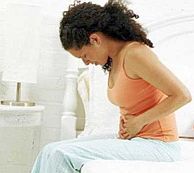
It is so embarrassing to consult your doctor for the same reason (another infection!) and need to take another round of different antibiotics (the trial and error method of problem "solving").
The truth is, however, that urinary tract infections CAN be successfully prevented, remedied and overcome naturally - without multiple rounds of prescription medications (antibiotics).
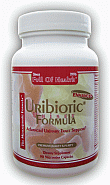
Health benefits of our proprietary Uribiotic Formula - a synergistic blend of 60 nutrients, phytonutrients (plant nutrients) and herbs thoroughly researched and put to the test - include:
- anti-inflammatory,
- antibacterial,
- antifungal,
- antiviral,
- antiparasitic,
- antioxidant,
- diuretic,
- anti-edematous (decreasing edema and swelling), and
- antitumor.
Formulated with care by a master formulator and manufactured according to the highest standards, this unique synergistic combination can help you deal with a bladder and/or even a kidney infection:
- safely,
- effectively, and
- with no side effects.
Thousands of UTI sufferers around the world have proven the efficacy of this approach. And what is most important, there has not been a single reported harm done by taking the Uribiotic Formula.
But don't take our word for it - try it out yourself.
|
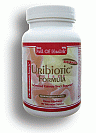
Naturopathic
Uribiotic® Formula
Advanced Urinary Tract Support*
 MADE IN USA MADE IN USA
60 Phytonutrients and Nutrients
72 Capsules
SUPPLEMENT FACTS:
Amount Per Serving (4 Capsules)
|
|
| 1. Vitamin A (All Trans Retinyl Palmitate) |
450 mcg |
| 2. Vitamin C (Calcium Ascorbate) |
60 mg |
| 3. Vitamin E (d-Alpha-Tocopherol Succinate) |
16.75 mg |
| 4. Riboflavin (Vitamin B-2) |
5 mg |
| 5. Vitamin B-6 (as Pyridoxine HCl) |
5 mg |
| 6. Biotin |
300 mcg |
| 7. Magnesium (as Taurinate) |
150 mg |
| 8. Zinc (as Monomethionine) |
25 mg |
| 9. Selenium (as Selenomethionine) |
25 mcg |
| 10-60. PROPRIETARY BLEND: |
|
| Grape Seed (Vitis vinifera) Extract (Std. to 95% Oligomeric Proanthocyanidins), Buchu Short Leaf 4:1 Extract, Oregano Leaf 5:1 Extract, Uva Ursi Leaf Extract (Std. to 20% Arbutin), Corn (Zea mays) Silk Extract, Echinacea (Echinacea angustifolia Root Extract, Echinacea purpurea Aerial Parts Extract), Horseradish (Armoracia rusticana) Root 10:1 Extract, Bee Propolis 2:1 Extract, Goldenseal Root Extract (Std. to 5% Berberine, Grapefruit (Citrus paradisi) Seed 4:1 Extract, Olive (Olea europaea) Leaf 4:1 Extract, Meadowsweet Herb Powder, Saw Palmetto Berry Extract (Std. to 25% Fatty Acids), Stinging Nettle Root 10:1 Extract, Caprylic Acid (as Sodium caprylate), Garlic Bulb Powder, Gotu Kola (Centella asiatica) Leaf Extract (Std. to 10% Asiaticoside), Purple Mangosteen (Garcinia mangostana) Rind Extract(Std. to 10% Mangostin), Cranberry (Vaccinium macrocarpon) Fruit Powder (90% Cranberry Solids), Horsetail Stem Extract (Std. to 7% Silica), Onion (Allium cepa) Bulb Powder, Pau D'Arco Bark 4:1 Extract, Watermelon (Citrullus lanatus) Fruit 4:1 Extract, Asparagus Shoot Powder, Astragalus Root Extract (Std. to 0.5% Astragalosides), Moringa (Moringa oleifera) Leaf 4:1 Extract, Black Walnut Hull Powder, Calcium D-Glucarate, Clove (Syzygium aromaticum) Bud Powder, Green Cardamom (Elettaria cardamomum) Seed Powder, N-Acetyl L-Cysteine, Pomegranate Fruit Extract (Std. to 40% Ellagic Acid), Rutin, Cayenne Fruit Powder, Cinnamon (Cinnamomum cassia) Bark 4:1 Extract, Great Yellow Gentian Root Powder, Hesperidin, Rosemary Leaf Extract (Std. to 6% Carnosic Acid), Triphala (Terminalia bellirica, Terminalia chebula, Emblica officinalis) Fruit Powder, Eleutherococcus senticosus Root Extract (Std. to 0.8% Eleutherosides), Horse-Chestnut (Aesculus hippocastanum) Fruit Extract (Std. to 20% Aeicin), Milk Thistle (Silybum marianum) Seed Extract, Bromelain, Chlorophyll (as Sodium Copper Chlorophyllin), Papain, Bergamot (Citrus bergamia) Dried Fruit Peel Powder, Trans-resveratrol, Vanadium (as V Sulfate), BioPerine® Black Pepper (Piper nigrum) Fruit Extract, Lycopene, Boron (as B Citrate). |
1,192.46 mg |
| Other Ingredients: Vegetable Cellulose (Capsule), Microcrystalline Cellulose, Vegetarian Leucine. |
|
Manufactured in the USA with domestic and imported ingredients in a GMP [Good Manufacturing Practice] Compliant Facility.
BioPerine® is a registered trademark of Sabinsa Corporation.
|
QUALITY & SAFETY
ASSURANCE |
| As a dietary supplement, starting after breakfast, take 4 capsules 3 times daily in between meals, each time with 4 ounces (˝ cup) of alkaline room-temperature water, or as recommended by a qualified healthcare professional. |
SUGGESTED USE |
| If you are taking antidiabetic or thyroid medications, or have a gastrointestinal condition, consult with your healthcare practitioner before taking this product. Do not take this product if you are pregnant, nursing or planning to become pregnant. |
WARNING |
| Discontinue use 2 weeks prior to elective surgery. |
CAUTION |
| Allergen free (Milk, eggs, fish, crustacean shellfish, tree nuts, peanuts, wheat, soy). |
PREMIUM PURITY |
Uribiotic® Formula*
The Mierzejewski Formula™
Formulated and distributed by Full of Health, Inc.
Lancaster, PA 17601
1.705.304.6246
* This statement has not been evaluated by the FDA. This product is not intended to diagnose, treat, cure or prevent any disease. |
Full of Health and Uribiotic are registered trademarks of Full of Health, Inc. |
Unique, Natural and Astonishingly Effective
Our all-natural Uribiotic Formula is so astonishingly effective that it continues to amaze even the most skeptical people, including medical doctors and other health professionals. Why? Because the combination of the above active ingredients provides comprehensive and balanced support for the entire urinary tract.
For this reason, we have decided to go worldwide and share our experience with the public on the Internet to help men around the world to overcome and remedy urinary tract infection that can lead to dangerous complications, such as kidney infection.
 Since 2003, we have been supplying with our proprietary Uribiotic Formula clients and customers in 34 countries: the United States, Australia, the United Kingdom, South Africa, New Zealand, Germany, Belgium, Mexico, Italy, Singapore, France, Russia, Croatia, Poland, Portugal, Denmark, United Arab Emirates, Hong Kong, St. Lucia (West Indies), Norway, Saudi Arabia, Turkey, Slovenia, Greece, Qatar, Jordan, Israel, the Netherlands, Luxembourg, Sri Lanka, India, Spain, China, and Chile.
With no doubt this unique supplement can be of great benefit to you. You have nothing to lose - and your urinary health to gain.
If necessary, it can be a part of a combined antibiotic therapy as Uribiotic Formula may even enhance the effectiveness of standard pharmaceutical antibiotics for the treatment of urinary tract infections (UTIs), especially in case of Staphylococcus aureus infections.
First Signs of Relief Within 24-48 Hours
|
Uribiotic Formula can cause an almost instant disappearance of
- the painful burning sensation when urinating,
- the need for frequent urination,
- the inability to empty the bladder completely even though you have the urge.
Uribiotic Formula can help to eliminate:
- the harmful bacteria from the inside of the urinary tract without disrupting the normal body functions.
Uribiotic Formula can help you prevent and remedy:
- both acute and repeated (chronic) urinary tract infections, and
- the need and dependence on antibiotics.
The results, however, may vary from person to person depending on the type of diagnosis (urine tests and/or symptoms), the type of bacteria, degree of severity of UTI (ranging from minor to serious), type of UTI (cystitis, urethritis, pyelonephritis), history of antibiotic intake (as this can be a cause of repeated UTIs), structural abnormalities, age, sex and other existing health conditions such as diabetes mellitus and/or any immuno-compromised state. Besides, about half of women with symptoms of a UTI actually have irritation of the urethra, vaginitis, candidiasis, interstitial cystitis, or sexually transmitted diseases (STDs). Some of these problems may also accompany or lead to UTIs.
|
Appreciated by Our Satisfied Customers Since 2003
|
How nice to have this opportunity to praise product Uribiotic Formula. I love to praise stuff that REALLY works.
I first discovered this amazing true formula out of desperation from my hospital bed... about four years ago.
I think that Doctors are not the end all be all answers to everything they believe they are! A large percentage of people who go in to the hospital actually die from their medical care.
I had a real nasty UTI. In the Emergency room after all the test results were interpreted by the Doctors (one a student and one a seasoned Doctor), I was told that my "severe UTI" was because I had an E. coli infection. I was advised to enter the hospital right then.
While I believed I would find comfort in the hospital, I found out quickly that was not the case. Doctor one and Doctor two informed me their plan was to bombard me and my infection with the "strongest anti-biotic" they had, in high dosage.
After a few says of feeling continually worse, I began to wonder if these Doctors really new what they were doing. A few days later I got the chance, finally, to ask, "What are the odds this medication will actually kill my infection(s)."
Doctor one AND Doctor two said: "50/50", that is fifty percent you'll live, fifty percent you'll die. REALLY! I was in the hospital for ten days at that time. I knew I had to get out of there. Pharmacy crap was killing me and I didn't want to be a statistic.
In my hospital bed then I roamed the internet, looking for a non-pharmaceutical way to treat my infection(s).
When I found the Uribiotic Formula and read everything, including the facts and testimony, I ordered two bottles of it.
Next, I got dressed and began to check out against medical advise. No one wanted to help me leave, so I yanked the IV out of my arm and got dressed blood or no blood. I left after tying my own arm tight with a paper towel from the bathroom. I got out of there, still in agony!
My cure came in the mail just a few days later. I had total faith in this product even before I using it. I took the supplement as directed and really and truly, I started feeling better the same day. Even though I felt better day to day, I continued to use the supplement until I used all of it.
The sever pain I felt when urinating was gone in two days. All my symptoms were gone a couple of days later. AMAZING! From hospital bed to cured in about a week. Truly AMAZING.
I want to advise anyone who is reading this to take my word. If you can't stand the pain anymore and you're smart enough to realize that the pharmacy doesn't always help, you should be ready to try something that REALLY works. I bought two bottles, but only needed one. It's like money in the bank, having another bottle of Uribiotic Formula in my medicine chest just in case I or my wife ever need it.
I loved going back to the Doctor all fine a couple of weeks after I left the hospital against medical advise. He was a student Doctor (Doctor "two" wasn't there). I brought my iPad with me with the intention of proving to him what really worked for me. He was surprised to see me looking so much better and he asked me, "How did you do it?" In my mind I thought, "Oh, you mean how did I save my own life?"
I felt like a life long supporter of Uribiotic Formula as I showed him the website and watched him read everything carefully. And then asked me if that was all I used and nothing else. I said, "YES."
I know I made him a believer, because he saw me before and after my infection. I knew I left him a little stunned and hoped he might become open to exploring alternatives to the pharmacy industry.
I felt great and still do, trust me, people. This stuff will help anyone with a UTI. Uribiotic is a fantastic product and it saved my life.
In a world of stuff that doesn't work, I have found great comfort using your Formula and knowing that it really works.
Thank you very much for the gift of Uribiotic.
Michael O.
Front Royal, VA
|
|
I have been purchasing the Uribiotic Formula for my father on behalf of my Mom for the past several months. So far, the results are amazing.
My father has a catheter and because of this has suffered numerous hospitalizations with urinary tract and bladder infections. Due to the numerous prescriptions of antibiotics, he had developed a resistance to most.
For the past few years, he has been in and out of the hospital and rehabilitation centers. This has taken a tremendous toll on him and the whole family, not to mention the financial burden.
I am happy to report that the Uribiotic Formula has been working. It's so nice to visit him and see him in good spirits.
I am so thankful to have found Uribiotic.
Theresa P.
Gilroy, California
|
|
Greetings!
I have been on your Uribiotic since June 9th, so it has been 11 days and it looks like the UTI has cleared up! Thank God!
I'm very excited to feel like this, that is a hundred percent better - more energetic, no symptoms at all - thanks to your Uribiotic Formula.
I have been faithful to your recommendation about the diet and have not touched sugar of any kind. So, I will continue to stay on this protocol until I finish, probably, the next bottle or maybe even two as I want to make sure my UTI is gone!
I don't know where I would be without your Uribiotic! I think you are an angel sent from God!
Thank you so much for putting your heart and energy into this incredible formula! Without you I would be lost, sick and very depressed!
May God bless you, your company and all that you do!
Best wishes and eternally grateful,
Gilynne del C.
Texas
|
|
Dear Mr. Mierzejewski,
I have waited a while after beginning my regime with your Uribiotic Formula to make sure it works before I wrote my testimonial.
My history with chronic severe UTI's goes back 40 years. I am 74, active, and a former English and French high school teacher. My husband and I have with 5 children - two are professional artists, one is a research vet, one is a filmmaker, and one owns three businesses. My husband and I have 19 grandchildren and every one of them is committed to making a difference in our society!
I have been hospitalized a number of times because of the severity of my UTI's.
I have finally realized, after reading your website and the reviews of your customers, that indeed it is the over-use of antibiotics that have speeded up my cycle of UTI's, as well as making them more dangerous. I have worked to build up my immune system with natural products, no sugar, no white flour, eat tons of veg's & fruits, drink lots of water, and take long walks daily.... but still it hasn't been enough.
To make a long story short, I found your website last September. I ordered one bottle. AMAZING THINGS HAPPENED! Not only did my UTI symptoms disappear (with me, visible blood is immediate).....but I felt like I was 25 years old again! I ordered 5 more bottles to build up my system against future attacks.
After finishing almost 5 weeks, I went a month feeling wonderful.
As the holiday season approached, I was deep in commitments and activity. I got another severe E. coli UTI. This time, my backup Uribiotic supply has worked slower than at first....yet it has successfully stopped my symptoms all by itself, and my energy is coming back in time for Christmas!
My doctor is a wonderful man, but still limited to his field of medicine. He cannot but agree that your Formula is amazing!
Mr. Mierzejewski, we feel the nations of both Canada and the United States should honor you with a statue for all you have done in the field of natural holistic healing!
I have just ordered another 12 bottles of Uribiotic, plus the Oil of Oregano, and the UT ProbioticUltra Strength. I believe these will be all the prophylaxis I need against future bloody UTI's.
We are retired missionaries and we have no income and are looking for some kind of holistic care health insurance, because I cannot see my ever stopping your wonderful products!
God bless you, Mr. Mierzejewski!
Dottie Powell
Fort Wayne, IN
|
|
October 10th, 2016
I'm pleased to let you know that URIBIOTIC killed pseudomonas bacteria* completely!
Thank you!
Steve M.
Dublin, CA
*Pseudomonas aeruginosa is a common bacterium - the third leading cause of hospital-acquired urinary tract infections, accounting for approximately 12 percent of all infections of this type usually related to urinary tract catheterization, instrumentation or surgery.
P. aeruginosa appears to be among the most adherent of common urinary pathogens to the bladder uroepithelium. An infection can occur via an ascending or descending route. It can also invade the bloodstream from the urinary tract. This route is the source of approximately 40 percent of P. aeruginosa infections.
As a highly relevant opportunistic pathogen, P. aeruginosa has low antibiotic susceptibility. It is naturally resistant to a large range of antibiotics and may demonstrate additional resistance after unsuccessful treatment.
|
|
Hello Mr. Andrew Mierzejewski,
I am writing to thank you for all you have done for me. I had an E. coli infection ruining my life for 6 years. I had seen numerous doctors and been tested every way that the medical profession could think of.
It started on my 50th birthday when my health deteriorated rapidly within 2 hours. I was feeling fine, sitting in Northern Ontario contemplating my first 5 decades of life. I felt tired after eating lunch and thought I should take a nap. Within two hours I had a fever of 104. I was vomiting and shaking uncontrollably.
My wife called for an ambulance and I was rushed to the hospital in Bracebridge. Once there, I was diagnosed with a severe urinary tract infection. They prescribed Cipro and sent me on way. The strain of E.coli in me was resistant to that antibiotic and consequently I had another violent attack, and my second ride in an ambulance. The hospital experience was too extreme to go into here.
Eventually, I as put on Septra and sent home. It took a few weeks and all seemed well. Another drug was eventually prescribed, called Suprax. This was meant to be a safer alternative. I adjusted to what I considered my "new normal". Within the year, while away from home again, the symptoms came back but I knew how to control them better.
I went to a urologist who confirmed that the E.coli was back. We started the Suprax again. He didn't feel that the two infections were related, even though the E. coli strain was the same. After all the scopes and tests he wanted me to endure, he couldn't find the source. He sent me to an Infectious Disease specialist. This medical Triage team sent me for a battery of more tests and used a lot of my time. I went through an amazing amount of antibiotics. I was on Suprax for 3 years.
The final round of drugs was Ertapenem. The Doctor referred to it as "the bazooka of all antibiotics". Other doctors referred to it as "Javex, Draino and Bleach". I was thinking this would solve it. It was administered for 28 days through an IV drip once a day. 17 days later, all my symptoms were back and raging in a full on attack. I started my stash of Suprax immediately and got the infection under control. The infection specialist was stumped!
While on Suprax there weren't any issues with the infection - but I was taking antibiotics daily with no end in sight. If I stopped and did nothing, the infection would eventually kill me.
The team of doctors recommended a path of surgeries to remove infected parts and tissue to see if they could cut out where the infection was nested. That seemed rather extreme to me. You referred to it as "barbaric." It would only lead to a reduced state of living and a dependency on the medical industry.
Looking for another way through this, my wife found your site and I immediately began reading. Then, I ordered your Uribiotic. I also called you and you advised me. You guided me through the whole process. I used a larger than prescribed amount of supplements as directed by you. You also explained the diet I needed and what other supplements to use.
I stayed the course and did not waiver for 3 months. I called you many times to understand what was happening with me and, as time went by, you adjusted the prescription as needed. It was the first 3 months in years that I didn't take a pharmaceutical antibiotic!
After these 3 months, I couldn't believe that it was over, the infection was gone and not returning.
I waited a few months before writing this note of endorsement. I am amazed and thankful. I have changed my eating habits and added certain supplements to my way of life. I'm not as strict about the diet anymore but I am very strict about the amount of sugar that I will allow myself. My eating habits are much better now. I think I will be amazed for years to come. I never thought I would get through this.
When the specialists suggested the surgery route I said "No." I was going to use your method. They were very skeptical. I told the team of doctors about my recovery and they were astonished. One doctor, who has been practicing his specialty with infections for 27 years, said that I taught him something new!
I thank you. You are a treasure, Mr. Mierzejewski.
Sincerely,
Gordon B.
Toronto, Canada
|
|
Let me start off by saying (and please keep in mind that I rarely submit feedbacks) that I had to send in this positive opinion on Uribiotic Formula and UT ProbioticsUltra. These two paired up equal excellence!
Where do I begin. After having a UTI on and off for way too long that I was never able to cure naturally (stayed away from antibiotics), didn't know what to do next. The infection travelled by body from head to toe. I'm talking strep sore throat almost every month before my monthly cycle, on and off burning sensation when urinating, occasional fevers and chills. On top of that indigestion issues such as belching, gas, low stomach acid, you name it. I could not live like this any longer.
I decided to search the web from top to bottom. Fell on the Uribiotic website and was intrigued by the product right away. I'm willing to invest, I thought. My health has been bad for too long, I said to myself.
Ladies and Gentlemen, Uribiotic and UT ProbioticsUltra have healed me from head to toe!
It has been only one week, but after a few days, my urine is clearer and the burning sensation has decreased by a lot. My strep throat/sore throat is totally gone. Indigestion issues have improved significantly.
Ladies, even my monthly cycle is a breeze!! No cramps!! I am sold and sad that I did not order more bottles. What was I thinking?!
All I can say is: give it a try!!
Melissa D.
Ottawa, Canada
|
|
Dear Uribiotic Team,
I have had recurrent UTI's for the past few years and my doctor usually just gives me Bactrim, which clears it up within 3 days. While on vacation recently I got another one the first day of my trip and panicked because the pain always seems unbearable.
I was able to get another prescription for Bactrim, but after 2 doses (6 days) I felt even worse. Two weeks later and 2 courses of Cipro later I was at my wits end!
My doctor told me there weren't any bacteria in my urine so it could be something else like urethritis or interstitial cystitis. I didn't care what it was, I just wanted to get rid of it and prevent it from ever coming back.
In desperation I went online and researched as much as I could. I found your website and it has been a life-saver.
I started feeling better after the first couple days of taking the Uribiotic Formula, and after the second bottle I was back to normal.
I couldn't believe how fast it worked, and that there were no side effects, like with antibiotics.
Since then I've also started taking your D-Mannose and Probiotic formulas for prevention and I haven't had any UTI symptoms since.
Thank you so much for your very informative website and very effective natural products.
Annie S.
Juneau, AK
|
|
For years I have been plagued with UTI's. Each time trying to fight it off with baking soda, Alka-Seltzer, drinking lots of water and searching the web for natural remedies, only to end up at the dreaded Urgent Care to get antibiotics. Some of them even gave me bad side effects.
I found Uribiotic Formula on my last web search and I read some of the testimonials and thought I would give it a try.
I was amazed! It really, really worked. I didn't go on antibiotics and my infection was cured.
Thank you a million times over! What a freedom to be able to have a natural cure and not have to be on antibiotics...
This product really works and I would highly recommend it to anyone who suffers from UTI.
Laurie S.
Wheelersburg, OH
|
|
Hello, again, Full of Health Team!
I just got on to your website to order more URIBIOTIC... I am the "Katie B." from Denver, Colorado! My testimonial has been on your home page for over 2 years now.
I have been living in China for the past year and I just recently got a bladder infection for the first time in over 2 years!
You have no idea how comforting it has been to have the assurance of having your product in my medicine cabinet while living in such a foreign land with foreign doctors and hospitals.
I was quite scared when I got the bladder infection a couple of days ago, because I thought, "what if it just doesn't work this time and I have to go to a hospital in China?!"
But, have no fear… URIBIOTIC worked for me AGAIN!
THANK YOU FOR YOUR AMAZING PRODUCT!!!! I sing your praises every time I have sex -:)
Thank you and have a great weekend!
Katie
|
|
Thanks, Andrew!
I got a severe bladder infection and also discovered I had an enlarged prostate. I was in bad pain when I often had to go to restroom. One night I was going every 30 minutes.
They put me on sulfa antibiotics and also wanted me to take Flowmax which I told them I would not take. I don't like taking antibiotics if I can help it.
They also did a CAT scan. I took the antibiotics for a few days but they did not help that much.
Until I got my order of Uribiotic in. I started taking it and, after a few days, noticed feeling a little better each day.
I started going to the bathroom about twice a night only. Then just once a night and now I never wake to go to the bathroom. My measured urine outflow in the morning became normal and with no pain.
I was also taking DP Extract for my enlarged prostate for about six weeks. I went to a specialist and he checked me and said that my prostate was normal. He said I don't need to come back.
Now everything is back to normal. I still take both Uribiotic and DP Extract.
I am very thankful for your help and advice, Andrew.
Aaron Hiller
Texas
|
|
Problem solved! The infection is GONE! I just thought you might want to know this in case you get any customers notifying you that URIBIOTIC doesn't seem to be working.
I love your product and continue to rave and refer anyone I talk to about UTIs to your
website.
THANK YOU FOR CREATING THIS PRODUCT!!!
Katie B.
Denver, Colorado
|
Safe and Effective in Animals
|
Hello,
I just wanted to say THANKS so much! I got the Uribiotic Formula and started the treatment. And my dog is doing so much better! No more blood in the urine or getting up at night having to go to the bathroom. She is happy and no more pain.
She have had bladder infections for more than 5 months and the vets had her on some very expensive antibiotics, including Baytril [Enrofloxacin]. And since she is 156 lb. you can imagine how much it cost me to have her on them.
But they were not curing her...
And since I started her on your product she is fantastic! Eating normal again and the life had come back to her body. Thanks so much!
I sent the links to the 2 vets that had seen her and recommended your product if they ever get a dog with a bladder infection resistant to all antibiotics.
Once more, thanks again so much!
Kind Regards,
Isilma H.
California
|
Therapeutic and Preventive Intake: Directions
|

|
URIBIOTIC FORMULA is a different route to contribute not only to your freedom from urinary tract infections, but also to your optimum urinary health. But when, after reading about this self-help method, you go back to your doctor for an opinion, he or she may say sarcastically, "A herbal antibiotic?! Nonsense! Whom are you going to trust? Some guy on the Internet!? I am your doctor. And as a medical professional, I am responsible for your health." In other words, do what I say or you're going to regret it.
No, this is not an unfair exaggeration. Just the reality we are all in. Not being sure, then, of who's actually giving you the correct information, you may face a real dilemma, a serious problem of trust. However, if - despite following your doctor's routine orders - you are not doing well, then, you should look at your situation honestly and ask yourself, "Am I willing to try a different route?"
It's a well-known fact that no one is immune to well-meaning but sometimes misguided advice from their MDs. Yes, they are professionals with medical degrees - but not with herbalist degrees. Unfortunately, as herbology (along with nutrition) has been excised from the medical school curriculum, most physicians have been, and still are, misinformed or even ill-informed about herbs. For a reason, of course.
Having said all that, with possible variations from person to person - depending on the diagnosis, degree of urinary tract infection, age of the sufferer, and other existing or pre-existing health conditions - the suggested intake of URIBIOTIC FORMULA can be described as follows:
I. Acute UTIs:
In case of first signs of discomfort (slight burning sensation when urinating, frequent urination and/or inability to empty bladder completely) you need to take:
-
4 capsules 3 times daily; therefore, for full benefits, 2 bottles of Uribiotic Formula will be needed.
Our ironclad recommendation: A 6-day therapeutic intake (1 bottle) and, then, an additional 6-day prophylactic intake (1 more bottle) to improve and/or restore the urinary tract’s normal pH, boost the natural safeguards - bodily defense systems that protect the urinary tract against pathogenic, infection-causing bacteria, therefore, to prevent recurring UTIs.
In case persistent signs of UTI (painful burning sensation when urinating, frequent urination at night and/or inability to empty bladder completely) you need to take:
-
4 capsules 3 times daily; therefore, for full benefits, 3 bottles of Uribiotic Formula will be needed.
Our ironclad recommendation: A 12-day therapeutic intake (2 bottles) and, then, an additional 6-day prophylactic intake (1 more bottle) to improve and/or restore the urinary tract’s normal pH, boost the natural safeguards - bodily defense systems that protect the urinary tract against pathogenic, infection-causing bacteria, therefore, to prevent recurring UTIs.
PLEASE NOTE: When acute nephritis (kidney infection) is present - accompanied by high fever along with sudden retention of urine (a painful urge to pass urine but the inability to do so) - have your condition assessed immediately by your physician.
II. Chronic/Repeated UTIs:
In case of recurrent, repeated UTIs (all the above symptoms along with the need and dependence on, or a history of frequent antibiotic use) you need to take:
-
4 capsules 3 times daily; therefore, for full benefits, 4 bottles of Uribiotic Formula will be needed.
Our ironclad recommendation: An 18-day therapeutic intake (3 bottles) and, then, an additional 6-day prophylactic intake (1 more bottle) to improve and/or restore the urinary tract’s normal pH, boo the natural safeguards - bodily defense systems that protect the urinary tract against pathogenic, infection-causing bacteria, therefore, to prevent recurring UTIs.
PLEASE NOTE: When acute nephritis (kidney infection) is present - accompanied by high fever along with sudden retention of urine (a painful urge to pass urine but the inability to do so) - have your condition assessed immediately by your physician.
When to Take Uribiotic: Directions
Take the capsules throughout the day (in the morning - beginning after breakfast, then, at noon, and in the afternoon) away from food, that is either 15 minutes before a meal or about one hour following a meal, each time with ˝ glass of purified room-temperature water, preferably alkaline. Both the early eaters and late eaters should have their morning dose of Uribiotic one hour after the first meal of the day (more commonly known as breakfast).
Also, do your best and try to sip lots of water throughout the day, always purified, room-temperature. Why alkaline? Because it has a higher pH level than "regular" water, helps to neutralize acid in the bloodstream, boost metabolism and increase the absorption of nutrients.
Not drinking enough water - an essential, vital nutrient - can increase the risk of urinary tract infections. Dark-yellow urine and/or infrequent urination are some of the symptoms of dehydration - a water imbalance disrupting levels of salts and sugars in the blood, which can interfere with the fundamental bodily functions.
Therefore, adults should consume around six to eight (6-8) cups of fluids or beverages each day. Unfortunately, many women still believe that drinking water causes... fluid retention. In fact, the opposite is true. The body retains water only if there is too little water is the cells. The average adult bladder can hold up to two cups, or 500 mL, of urine for two to five hours.
Cautions and Contraindications
Sexual System:
Uribiotic Formula is not recommended to be taken during pregnancy as it can cause contractions of the uterus due to presence of Goldenseal and hydroquinone (via arbutin present in Uva Ursi/Bearberry).
Pharmaceutical Drugs:
URIBIOTIC FORMULA should be consumed with caution by patients on a high dose of warfarin (blood thinner) due to the presence, although in an insignificant amount, of garlic which may potentiate the anticoagulant effects of warfarin. (Reference: Fugh-Berman, A. Herb-drug interactions. Lancet. 355(9198):134-138, 2000).
Do Not Stop!
Although symptoms-free, please DO NOT stop taking Uribiotic Formula and continue to use it until all bottles are empty.
If you are prone to repeated/chronic urinary tract infections keep an extra bottle of Uribiotic Formula on hand and use it immediately at the first signs of infection for the minimum of 3 consecutive days, taking 4 capsules 3 times daily.
In time, you will notice that the frequency of your urinary tract infections begins to seize, making the further use of Uribiotic Formula - with some possible exceptions - unnecessary and/or occasional only.
Remember: The Results May Vary
Once again, please note that the results may vary from person depending on the type of diagnosis (urine tests and/or symptoms), the type of bacteria, degree of severity of UTI (ranging from minor to serious), type of UTI (cystitis, urethritis, pyelonephritis), history of antibiotic intake (as this can be a cause of repeated UTIs), structural abnormalities, age, sex and other existing health conditions such as diabetes mellitus and/or any immuno-compromised state. Besides, about half of women with symptoms of a UTI actually have irritation of the urethra, vaginitis, candidiasis, interstitial cystitis, or sexually transmitted diseases (STDs). Some of these problems may also accompany or lead to UTIs.
If Your Infection Persists
In order to enhance the therapeutic, protective and preventive (prophylactic) effects of Uribiotic Formula, especially in case of stubborn, severe and complex urinary tract infections, you may consider taking with it other supporting, bacteria-specific supplements, such as:
Attention Male Adults!
Besides bladder infections, men quite often suffer from undiagnosed prostate infection (prostatitis) and/or benign prostatic hyperplasia (BPH), a non-cancerous swelling of the prostate gland. Therefore, we recommend taking Uribiotic Formula along with another specialty supplement targeted for prostate health: European DP Extract.
|


Secure Online Order

|
United States and Worldwide (USD)
(Except Denmark, Germany, Mexico, Nigeria, Norway, Saudi Arabia, South Africa, Sweden, Turkey, Ukraine, United Arab Emirates,)
|
|
INTERNATIONAL SHIPPING FEE
(If you are outside the United States)
The website software we use makes it difficult to include a variable international shipping fee for different countries. Therefore, if our cost of shipping to your destination country is significantly different from the Shipping Fee at checkout we will contact you by e-mail with a shipping quote for your approval.
We do not charge for any product until it is ready to ship from our Philadelphia, PA warehouse by U.S. Postal Service (USPS).
Our Promise:
You may rest assured that you will NEVER be put on any automatic reorder scheme!
ONLINE CUSTOMER AGREEMENT
Although Uribiotic is an effective complementary remedy for promoting
urinary tract health and healing, it is not a replacement for conventional medical treatment.
I understand that the information provided herein is not a substitute for medical examination and/or diagnosis; and that is recommended that I see a physician for any physical ailment that I might have and for any new exercise activity, dietary supplementation or diet program that I intend to begin.
I understand that Full of Health, Inc. does not have a money-back guarantee policy and shall not be liable for any issues whatsoever that may arise from the use of/or reliance upon any information obtained and/or any products purchased online through the website of the said company.
By placing my order, I have agreed to accept the conditions of sale contained herein.
|
Concerned About the Cost? Remember:
The bitterness of poor results lingers long after the sweetness of low price.
AmeriCommerce®
Secure Online Payment
|
|

Phone Assistance
If you would like to discuss your ordering options, please give us a call:
- 1. 705. 304. 6246 (US/Can) Mon. Wed. Fri. 11:00 am - 3:00 pm EST (Holidays Excluded).
If there is nobody available to take your call, kindly
click here to email us. We will get back to you next business day.
PLEASE NOTE: If the link above does not respond, it means you are a Mozilla's Firefox web browser user, therefore, this Java plugin has been blocked and disabled on your computer.
Bladder Infection: Spinal Cord Injuries
Neurological conditions like paraplegia, a spinal cord injury, also called spinal cord impairment (SCI), usually result in a neurogenic bladder - an unstable or atonic bladder (with no muscle tone).
People with spinal cord injuries have lost, partial or complete, control over their bladder and sphincter due to the compromised nerve receptors that are responsible for:
- contracting and relaxing the muscles of the bladder and the sphincter, and
- registering feelings of pressure or release.
Due to this condition, most paraplegics are exposed to the regular use of catheters and drugs. (The more traditional cap and bag, with continual drainage, is falling from favor even though it is a safer system).
However, catheters often increase the risk of the urinary tract injuries and repeated bladder infections - a common problem in people with spinal cord impairment.
Exposed to repeated or long-term courses of antibiotics, in time, they also develop resistance to drugs what makes maintaining healthy urinary tract for them even more difficult.
Contrary to a popular belief and common medical practice, people with spinal cord injuries or spinal cord impairment do NOT have to:
- suffer from chronic bladder-kidney infections and
- be exposed to vicious antibiotics.
It is our clinical experience that paraplegics, expecially those who use catheters, can successfully remedy, and most importantly, prevent bladder-kidney infections with the help of our Uribiotic Formula.
Therefore, you, or someone you know or hold dear, who suffers from spinal cord injury, should give this unique herbal antibiotic serious consideration.
People with SCI Write to Us
Andrew,
I want to thank you for developing the product, Uribiotic.
Due to a fall which caused a spinal cord injury about 1 1/2 years ago, I have had a Pseudomonas urinary tract infection repeatedly.
I purchased your product about two months ago and took the full dosage. The next urinalysis culture showed no Pseudomonas!
I dropped back to three capsules of your Uribiotic per day for precautionary maintenance and have not had a urinary tract infection sense.
After pic lines and liquid antibiotic injections and hospital stays off and on for over a year, which did not work for me, I have to thank you for this product which does work.
Stephen M.
Dublin, CA
|
Andrew,
I wanted to share some news with you, but first I would like to reiterate my story as to maybe help some other folks who undoubtedly have the same dilemma I have had.
I have been a quadriplegic since June of 1986, over 26 years. Almost since my acute injury, I have been burdened with troublesome reoccurring urinary tract infections. These infections for years were treated repeatedly with oral antibiotics by several different doctors: Bactrim, Amoxicillin, Macrobid, Cipro, Levaquin, etc. I have been on all of them numerous times. In the past, these infections were always treated aggressively with antibiotics.
Opinions have changed and now doctors are more cautious treating their spinal cord patients with antibiotics unless they are symptomatic. The view now that spinal cord patients can live effectively with colonized bladders (!)
Eventually I reached the point where the Pseudomonas bacterium I was colonized (high greater than 100,000 colonization) with was resistant to all oral antibiotics. They made it very hard for me to function and live life. They affected my energy level and lowered my blood pressure to levels that a productive life of any kind was impossible. Periodically, I would become septic. This would result in IV antibiotic therapy, typically two or three different drugs, and weeks, sometimes months, in the hospital.
Because of the ineffectiveness of oral antibiotics, over the last couple years I have been directed by numerous doctors to do a bladder irrigation several times a week. This would consist of 1 g of Gentamicin mixed with 50 mL of normal Saline, and then via catheter put directly into the bladder, clamped off for 30 to 60 min. and then expelled from the bladder.
I must admit, I have experienced some benefit from this therapy. But it didn't take long until the Pseudomonas was resistant to Gentamicin. Then I was directed by doctors to substitute Tobramycin for the Gentamicin, and again the same protocol. When the Pseudomonas became resistant to the Tobramycin, I was directed by doctors to substitute Amikacin for the Tobramycin. Eventually, even these bladder lavages lost their effectiveness.
Early this spring, I ended up in my local emergency room very, very sick with urosepsis [a systemic inflammatory response of the body to infection - A.M.] - high fever and very low blood pressure. I was in serious trouble. Urine cultures showed a resistant Pseudomonas sensitive to only two drugs: Amikacin and Fortaz. The colony count was well over 100,000. My white blood count was 19. I had to have a PIC line put in and was given IV Fortaz every eight hours for 12 days. I went through this same scenario again twice this summer. Two more trips to the emergency room dangerously ill.
During these last two episodes, I was given IV Fortaz 1 g every eight hours for 14 days, while at the same time irrigating my bladder with 1 g of Amikacin/50 mL normal saline. Both of these treatments continued for 14 days. When the dual therapy was finished, my doctor ordered a repeat urine test. Even after these two therapies, I still had greater than 50,000 colonies of resistant Pseudomonas.
At this point, I began an exhaustive search to find something, anything that could help the situation.
I went to no fewer than six Infectious Disease Doctors at four different hospitals. None of them seem to have any answers. I spent days and weeks searching the Internet and different blogs for something that could help.
Eventually, I stumbled across Oil of Oregano, and from there I found the Full of Health website. I went over the website thoroughly, and truth be told, was very skeptical.
On it there was a special link for spinal cord injured people. I read the testimonials. Although still skeptical, I purchased three bottles of Andrew's Uribiotic Formula, and three bottles of Oil of Oregano.
I began taking the products on August 10th. I also had a doctor's appointment that day to see my urologist. I brought in my urine for culture. Sure enough, there were greater than 100,000 colonies of resistant Pseudomonas, and Enterococcus.
On August 21st, I had another doctor's appointment. I again brought a urine sample. This time there were 10,000 colonies of Pseudomonas.
That's 90% of the colonization gone in 11 days. Remarkable!
I find this simply amazing and hard to believe after all I have gone through.
Thank you, Andrew, for providing such a simple remedy to a problem that has been so troublesome for over 25 years.
Daniel C.
Massachusetts
|
I have been quadriplegic for 15 years. About seven years ago, I started to suffer recurrent urinary tract infections to the point where most of the bacteria had become multiresistant.
My urologist pointed out to me that kidney failure is the biggest killer of people with spinal cord injuries as a result of repeated urinary tract infections which became untreatable as a result of repetitive use of antibiotics.
About two years ago I developed an infection, the bacteria being pseudomonas. Antibiotics did not work and the decision was made to not use any more, live with it and hope it didn't get into my bloodstream.
I couldn't accept this, so I researched the Internet once again until I finally found out about oil of oregano and Uribiotic. I ordered some, showed my GP who confirmed that there was nothing in it that could possibly cause any harm and to give it a go, which I did.
Within a few weeks the urinary tract infection cleared up.
I have barely had any symptoms since, and when I do I just use the Uribiotic for a couple of days and symptoms clear up. No side effects and no worries about the tablets not working.
I am a skeptic and honestly didn't think this would work when I tried it, but it does. If I didn't find out about it, I hate to think where I would be now.
I just wish I knew about it sooner.
Janine N.
Perth, Western Australia
|
Thanks, Andrew, for your advice and support with my Pseudomonas [aeruginosa] bladder infection with your amazing product Uribiotic which stopped the infection and kept it away.
I've suffered from UTIs for 18 years since my spinal cord injury and now I'm infection free.
JASON C.
Great Britain
|
As a paraplegic for almost 14 years, I was almost constantly on antibiotics due to chronic bladder infection. However, being afraid of possible side effects, for many years I was reluctant to consider any natural alternatives.
I was afraid of getting diarrhea or constipation. These are the worst - a real disaster! But after successful experience with D-Mannose, I started looking for other natural means to solve my problem.
And I was pleasantly surprised by lack of any adverse reactions to URIBIOTIC, which I introduced to my system very cautiously.
Two weeks later, my urine culture showed NO E. coli. Burning went away in a
few days. I'm pleased to report such great results.
Barret D.
Minnesota
|
Advanced Urinary Tract Support: Naturopathic Program
 NEED HELP OR ADVICE?
Contact us by  or by phone: 1. 705. 304. 6246 (US/Can) or by phone: 1. 705. 304. 6246 (US/Can)
Mon. Wed. Fri. 11:00 am-3:00 pm EST (Holidays Excluded)
 © 2003-2022 Remedy-Bladder-Infection.com | Stop Urinary Bladder Infection with UTI Uribiotic Formula | Natural UTI Cure Treatment & Prevention. Alternative non-antibiotic treatment for cystitis, urethritis, and urethral syndrome. The information on bladder infection and the natural alternatives to antibiotics provided herein is a general overview on bladder infection and may not apply to everyone; therefore, it should not be used for diagnosis or treatment of any medical condition. While reasonable effort has been made to ensure the accuracy of the information on bladder infection, Full of Health Inc. assumes no responsibility for errors or omissions, or for damages resulting from use of the information herein.
URIBIOTIC and FULL OF HEALTH are registered trademarks of Full of Health, Inc.
|