















|
Win a free bottle of Uribiotic
Your feedback is important to us. Please tell us what you like most about any of our UTI Products from your own experiences using them. At the beginning of every month we will pick our favourite entry as the winner and publish it on this site. In appreciation for your time, you will receive a free bottle of Uribiotic. Click here for details |
|
UTI Signs Symptoms | UTI Causes Risk Factors | UTI E. Coli | UTI Antibiotics | UTI Catheters | Uribiotic Testimonials
Urinary Tract Infection Remedy
This website is intended to help you - a bladder infection sufferer - become an informed patient who can manage her or his own care, ask the right questions, insist on adequate management and information, and seek an optimal health outcome. Perhaps it will even help medical health professionals to appreciate and, hopefully, consider the nutritional and lifestyle-based approach as the alternative treatment option for urinary tract infections. When it comes to urinary tract infection, you need to stay alert, ask questions, and ultimately rely on yourself for important healthcare decisions. By applying the outlined guidelines, you will be able to take better control of your urinary health, just as we all should do. General Suggestions Bladder infections occur when microbes, mainly bacteria, get through the urethra into the bladder. This can happen by the way you wipe after going to the bathroom, or through sex. Bladder infections can also be caused by a blockage of urine flow, which may occur in pregnant women or in men with an enlarged prostate.
Women In Particular If you're a woman:
Men In Particular If you are a man:
Urinary Tract Infection: Common Risk FactorsThere is a number of factors that increase the risk of developing urinary tract infection. Some women are more prone to getting a bladder infection than others.
Being Female
Being Pregnant
Poor Hygiene It is very easy to contaminate one's fingers when wiping oneself with toilet paper, and if those contaminated fingers come anywhere close to the opening of the urethra, there is a high likelihood of infection in predisposed individuals. Only white unscented toilet paper should be used as many women react to the dyes and chemicals in the other toilet papers. Unbleached toilet paper would be even better to reduce:
Sexual Position 'from Behind'
Diaphragm Use
Frequent Intercourse: Honeymoon Cystitis The Elderly Older adults are at high risk for developing bladder infection (cystitis), with the incidence being as high as 33 out of 100 people. What may place the elderly at increased risk for developing bladder infection, is
Postmenopausal
Urinary Incontinence Incontinence, however, is not a disease, but rather a symptom of another medical condition involving the urinary system. Some causes, such as urinary tract infections, may be temporary. Others, especially in men, can be long-lasting, such as prostate enlargement (BPH) blocking the urethra or - as an effect of prostate surgery (prostatectomy). Urinary incontinence can have a varying impact on peoples lives. In many cases it can be very distressing and embarrassing, often preventing one living a normal life. This embarrassment prevents many people seeking help, this is a pity as there are many things that can be done to help.
Failure to Completely Empty the Bladder
Diabetes: Elevated Blood Sugar Levels
Urinary Tubes, Stents, or Catheters
Catheterization in males is more difficult and uncomfortable than in females because of the longer urethra.
Diabetic Bladder Disfunction The incidence of the urologic complications of diabetes, such as autonomic neuropathy affecting the urinary bladder, ranges from 27 percent to 85 percent. In addition to autonomic bladder dysfunction in diabetes, there is an increased incidence of asymptomatic and symptomatic bacteria, which can progress to kidney infection and kidney damage. This increase in bladder infection in diabetes has been attributed to numerous etiologies, such as:
However, there are very few published research studies which address either the clinical aspects of bladder dysfunction in the diabetics or the basic molecular and cellular aspects of the diabetic bladder.
Neurogenic Bladder: Spinal Cord Injury Men with spinal cord injuries have lost, partial or complete, control over their bladder and sphincter due to the compromised nerve receptors that are responsible for:
Due to this condition, most paraplegics are exposed to the regular use of catheters and drugs. (The more traditional cap and bag, with continual drainage, is falling from favor even though it is a safer system). However, catheters often increase the risk of urinary tract injuries and repeated bladder infections - a common problem in people with spinal cord impairment. Exposed to repeated or long-term courses of antibiotics, in time, they also develop resistance to drugs what makes maintaining healthy urinary tract for them even more difficult. However, contrary to a popular belief and common medical practice, men with spinal cord injuries or spinal cord impairment do not have to suffer from chronic bladder infections and do not have to be exposed to countless rounds of vicious antibiotics.
History of Childhood Urinary Tract Infections
Congenital Abnormality: Vesico-Ureteric Reflux
Suppressed Immune System: Chronic Illness
Blood Type Urinary Tract Infection: Most Common CausesIn most cases, about 80 percent in adults, urinary tract infection is caused by a variety of pathogens - infectious bacteria - normally present in the intestines, especially in the rectum (colon). Nearly all infections of the lower urinary tract and bladder are caused by a few strains of E. coli bacteria, called uropathogenic Escherichia coli (UPEC). A variety of other Enterobacteriaceae and Gram-positive pathogens, includes:
These bacteria tend to remain limited to the urethra and reproductive system and, unlike E. coli, they are sexually transmitted. Other possible causes of urinary tract infections include:
Sexually Transmitted Chlamydia InfectionChlamydia is a common sexually transmitted disease caused by a bacterium called Chlamydia trachomatis. In women, the chlamydia organism infects cells of the lining of
Persons with chlamydia infections often have no symptoms. Consequently, they may transmit the infection to other people without knowing it. However, when the symptoms do occur, their type and severity will depend on the site of the infection and the person's response to it. Women who do have symptoms of chlamydia infection may notice:
To diagnose chlamydia, a special test must be done by a health professional. Chlamydia infection is easily treated with an antibiotic medication. However, if it is not detected and treated, chlamydia infection can lead to complications, such as pelvic inflammatory disease, a condition that signals the infection has spread to the uterus and fallopian tubes. Symptoms of pelvic inflammatory disease include:
This serious condition requires prompt medical attention. In pregnant women, chlamydia infection can be passed on to their newborn children, where it can cause:
E. Coli Bacterial InfectionVarious harmless strains of uropathogenic E. coli (UPEC) are normally present in the body - but they do not belong in the urinary tract. The bacteria, however, have multiple little hairs called cilia that function like little feet that allow them to climb from the skin around the vagina, up the urinary tube, into the bladder. If E. coli get into the bladder or the urethra (tube that carries urine from the bladder), the body has ways of fighting them off - including the obvious methods of simply flushing them out with the urine. But these bacteria have evolved ways of anchoring themselves to the cells of the urinary tract. The invading E. coli bacteria take advantage of receptors naturally found on the cells of the mucosal lining of the urinary tract. Receptors are like molecular "docking bays" for substances which the cells need for their normal growth and development. Like pirates in an old movie, E. coli use "grappling hooks", called type I pili, to first hook on to these receptors, and then to invade the cell. (These pathogenic "grappling hooks" are composed of long, fibrous chains of a molecular "glue" called adhesin). Once inside the cell, E. coli can live and reproduce in safety, shielded from many of the body's defensive immune responses. In fact, they are so sophisticated that when the body detects that cells have been infected and activates the cell suicide program to destroy the bacteria, E. coli can actually flee the dying host cell before it is flushed out, and look for new cells to invade! Antibiotic Treatments: E. Coli Survival RateUropathogenic E. coli return in as many as 30 percent of women apparently cured by antibiotics! They are able to survive antibiotic treatments by reverting to an inactive state. Within several days of antibiotic treatment, the number of bacteria reproducing drop to zero. Not all the bacteria are killed, though. About 3 percent of the bacteria may be still present in a dormant state after treatment with ciprofloxacin (Cipro) and about 7 percent may linger after treatment with trimethoprim-sulfamethoxazole (Bactrim/Septra). Even after a month of antibiotic exposure, about 10 million of the original 1 billion bacteria may remain. Antibiotic treatment does not successfully kill all the bacteria participating in the infection and may, in fact, encourage many of the bacteria to persist in a resting state. Therefore, current standard drug treatments for bladder infections are not adequate and this phenomenon may account for many of the repeated urinary tract infections. E. Coli: New Antibiotic-Resistant StrainA newly identified, antibiotic-resistant strain of a common E. coli bacterium is contributing to an increase in relatively hard-to-treat bladder infections in women. The analyzed strain, resistant to trimethoprim-sulfamethoxazole, a popular two-drug combination, shows a pattern of resistance to multiple antibiotics and has genetic characteristics called "virulence factors" that increase its ability to infect the urinary tract. Not much is known about how new strains of bacteria that infect the urinary tract arise and spread. It could be that this organism has been around forever and has now acquired resistance to several antibiotics. It could have been introduced, perhaps through contaminated food. E. Coli-Induced Repeated Bladder InfectionsFor women who are more prone to repeated infections, it can be a painful and frustrating battle. Most likely these are women over the age of 55 years or between the ages of 25 and 29. Those women are likely to continue having urinary tract infecions, who have had three or more a year. Therefore, they can get another infection within 18 months of the last one, or even more requently. One possible factor behind recurrent urinary tract infection may be the ability of bacteria to attach to cells lining the urinary tract. The symptoms sometimes can be caused by chemical irritation such as bath additives and washing powders. They may disappear if toiletries and washing powder are changed. Usually, the latest infection stems from a strain or type of bacteria that is different from the infection before it, indicating a separate infection. Even when several urinary tract infections in a row are due to E. coli, slight differences in the bacteria indicate distinct infections. However, some women have recurrent symptoms suggestive of urinary tract infection - but without infection being present. This condition is not serious but can be troublesome. Chronic or recurrent urinary tract infections should be always treated thoroughly because of the chance of kidney infection (pyelonephritis). Prostate Infection or Inflammation (Prostatitis)Severe symptoms of bladder infections can be caused by acute bacterial prostatitis, characterized by an inflammation of the prostate gland (a gland near the bottom of the bladder, close to the urethra). This non-contagious disease, however, affects 50 percent of men of all ages during their lifetimes. Also repeated bladder infections can be associated with long-lasting or chronic prostatitis (CP) - the most common form of the disease, usually caused by detriemental bacteria. Symptoms of prostatis are similar to those of bladder infection. Unfortunately, low-grade prostatitis is often missed on a doctor visit. Therefore, you may experience no symptoms or symptoms so sudden and severe that you have to seek emergency medical care. However, if you are approaching age 50, you should also look for any of the following:
These could also be symptoms of an enlarged prostate, a condition called benign prostatic hyperplasia (BPH) causing the buildup of urine in the bladder, which increases the likelihood that pathogenic bacteria will grow and trigger an infection.
Urinary Self-Defense Systems Against BacteriaInfection does not always occur when bacteria are introduced into the bladder because the urinary system is structured in a way that helps ward off infection. A number of defense systems - natural safeguards - that protect the urinary tract against infection-causing bacteria includes:
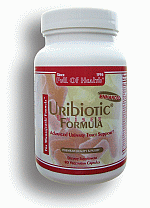
Uribiotic Formula: Herbal Antibiotic
Over the years, at Full of Health, we have learned that urinary tract infections can be addressed naturally. With the help of antibacterial and anti-inflammatory herbs, nutrients and phytonutrients, it is possible to get through both acute and chronic infections by:
By preventing bacterial cell division and breaking down the walls and cytoplasm of bacteria (in a similar fashion to some types of pharmaceutical antibiotics), Uribiotic Formula helps to inhibit the growth (or kill) many types of detrimental pathogenic bacteria including:
* PLEASE NOTE: Pseudomonas aeruginosa is a common bacterium found in soil, water, skin flora and most man-made environments. An opportunistic pathogen of immunocompromised individuals vulnerable to infections, it typically infects the pulmonary tract, urinary tract, burns, wounds, and also causes other blood infections. P. aeruginosa is the third leading cause of hospital-acquired urinary tract infections, accounting for approximately 12 percent of all infections of this type. They are usually related to urinary tract catheterization, instrumentation or surgery. It is a common cause of post-operative infection in radial keratotomy (RK) eye surgery patients and of "hot-tub rash" (dermatitis), caused by lack of proper periodic attention to water quality. P. aeruginosa appears to be among the most adherent of common urinary pathogens to the bladder uroepithelium. An infection can occur via an ascending or descending route. P. aeruginosa can also invade the bloodstream from the urinary tract. This route is the source of approximately 40 percent of P. aeruginosa infections. P. aeruginosa can cause chronic opportunistic infections. These kinds of infections are a serious problem for medical care. Many patients, immunocompromised and the elderly in particular, often cannot be treated effectively with traditional antibiotic therapy. As a highly relevant opportunistic pathogen, P. aeruginosa has low antibiotic susceptibility. It is naturally resistant to a large range of antibiotics and may demonstrate additional resistance after unsuccessful treatment. Therefore, choosing an antibiotic should be guided according to laboratory sensitivities, rather than empirically. However, if antibiotics are started empirically - with some exceptions, given by injection only - then cultures should be obtained and, after having the culture results available, the choice of an antibiotic used should be carefully reviewed.
** PLEASE NOTE: In case of Staphylococcus aureus infections, Uribiotic Formula can be a part of a combined antibiotic therapy as it may enhance the effectiveness of pharmaceutical antibiotics for the UTI treatment.
Uribiotic Formula: An Immune BoosterAn immune-boosting Uribiotic Formula helps to increase the natural safeguards - bodily defense systems that protect the urinary tract against pathogenic, infection-causing bacteria, such as:
Uribiotic Formula: Health Benefits
The truth is, however, that urinary tract infections CAN be successfully prevented, remedied and overcome naturally - without multiple rounds of prescription medications (antibiotics). Health benefits of our proprietary Uribiotic Formula - a synergistic blend of 60 nutrients, phytonutrients (plant nutrients) and herbs thoroughly researched and put to the test - include:
Formulated with care by a master formulator and manufactured according to the highest standards, this unique synergistic combination can help you deal with a bladder and/or even a kidney infection:
Thousands of UTI sufferers around the world have proven the efficacy of this approach. And what is most important, there has not been a single reported harm done by taking the Uribiotic Formula. But don't take our word for it - try it out yourself.
Unique, Natural and Astonishingly Effective Our all-natural Uribiotic Formula is so astonishingly effective that it continues to amaze even the most skeptical people, including medical doctors and other health professionals. Why? Because the combination of the above active ingredients provides comprehensive and balanced support for the entire urinary tract. For this reason, we have decided to go worldwide and share our experience with the public on the Internet to help men around the world to overcome and remedy urinary tract infection that can lead to dangerous complications, such as kidney infection.
With no doubt this unique supplement can be of great benefit to you. You have nothing to lose - and your urinary health to gain. If necessary, it can be a part of a combined antibiotic therapy as Uribiotic Formula may even enhance the effectiveness of standard pharmaceutical antibiotics for the treatment of urinary tract infections (UTIs), especially in case of Staphylococcus aureus infections. First Signs of Relief Within 24-48 Hours
Appreciated by Our Satisfied Customers Since 2003
Safe and Effective in Animals
Therapeutic and Preventive Intake: Directions
| |||||||||||||||||||||||||||||||||||||||||||||||||||||||||||||
No, this is not an unfair exaggeration. Just the reality we are all in. Not being sure, then, of who's actually giving you the correct information, you may face a real dilemma, a serious problem of trust. However, if - despite following your doctor's routine orders - you are not doing well, then, you should look at your situation honestly and ask yourself, "Am I willing to try a different route?" It's a well-known fact that no one is immune to well-meaning but sometimes misguided advice from their MDs. Yes, they are professionals with medical degrees - but not with herbalist degrees. Unfortunately, as herbology (along with nutrition) has been excised from the medical school curriculum, most physicians have been, and still are, misinformed or even ill-informed about herbs. For a reason, of course. Having said all that, with possible variations from person to person - depending on the diagnosis, degree of urinary tract infection, age of the sufferer, and other existing or pre-existing health conditions - the suggested intake of URIBIOTIC FORMULA can be described as follows:
I. Acute UTIs:
In case persistent signs of UTI (painful burning sensation when urinating, frequent urination at night and/or inability to empty bladder completely) you need to take:
PLEASE NOTE: When acute nephritis (kidney infection) is present - accompanied by high fever along with sudden retention of urine (a painful urge to pass urine but the inability to do so) - have your condition assessed immediately by your physician.
II. Chronic/Repeated UTIs:
PLEASE NOTE: When acute nephritis (kidney infection) is present - accompanied by high fever along with sudden retention of urine (a painful urge to pass urine but the inability to do so) - have your condition assessed immediately by your physician.
When to Take Uribiotic: Directions
Besides bladder infections, men quite often suffer from undiagnosed prostate infection (prostatitis) and/or benign prostatic hyperplasia (BPH), a non-cancerous swelling of the prostate gland. Therefore, we recommend taking Uribiotic Formula along with another specialty supplement targeted for prostate health: European DP Extract. |


 MADE IN USA
 Since 2003, we have been supplying with our proprietary Uribiotic Formula clients and customers in 34 countries: the United States, Australia, the United Kingdom, South Africa, New Zealand, Germany, Belgium, Mexico, Italy, Singapore, France, Russia, Croatia, Poland, Portugal, Denmark, United Arab Emirates, Hong Kong, St. Lucia (West Indies), Norway, Saudi Arabia, Turkey, Slovenia, Greece, Qatar, Jordan, Israel, the Netherlands, Luxembourg, Sri Lanka, India, Spain, China, and Chile.



|
United States and Worldwide (USD)
(Except Denmark, Germany, Mexico, Nigeria, Norway, Saudi Arabia, South Africa, Sweden, Turkey, Ukraine, United Arab Emirates) |
|
INTERNATIONAL SHIPPING FEE
(If you are outside the United States)
The website software we use makes it difficult to include a variable international shipping fee for different countries. Therefore, if our cost of shipping to your destination country is significantly different from the Shipping Fee at checkout we will contact you by e-mail with a shipping quote for your approval.
We do not charge for any product until it is ready to ship from our Philadelphia, PA warehouse by U.S. Postal Service (USPS).
Our Promise:
You may rest assured that you will NEVER be put on any automatic reorder scheme!
|
ONLINE CUSTOMER AGREEMENT
Although Uribiotic is an effective complementary remedy for promoting urinary tract health and healing, it is not a replacement for conventional medical treatment. I understand that the information provided herein is not a substitute for medical examination and/or diagnosis; and that is recommended that I see a physician for any physical ailment that I might have and for any new exercise activity, dietary supplementation or diet program that I intend to begin. I understand that Full of Health, Inc. does not have a money-back guarantee policy and shall not be liable for any issues whatsoever that may arise from the use of/or reliance upon any information obtained and/or any products purchased online through the website of the said company. By placing my order, I have agreed to accept the conditions of sale contained herein. |
Concerned About the Cost? Remember:
The bitterness of poor results lingers long after the sweetness of low price.
|
AmeriCommerce®
Secure Online Payment |
|
|

Phone Assistance
If you would like to discuss your ordering options, please give us a call:
If there is nobody available to take your call, kindly click here to email us. We will get back to you next business day.
PLEASE NOTE: If the link above does not respond, it means you are a Mozilla's Firefox web browser user, therefore, this Java plugin has been blocked and disabled on your computer.
Bladder Infection: Spinal Cord Injuries
Neurological conditions like paraplegia, a spinal cord injury, also called spinal cord impairment (SCI), usually result in a neurogenic bladder - an unstable or atonic bladder (with no muscle tone).
People with spinal cord injuries have lost, partial or complete, control over their bladder and sphincter due to the compromised nerve receptors that are responsible for:
- contracting and relaxing the muscles of the bladder and the sphincter, and
- registering feelings of pressure or release.
Due to this condition, most paraplegics are exposed to the regular use of catheters and drugs. (The more traditional cap and bag, with continual drainage, is falling from favor even though it is a safer system).
However, catheters often increase the risk of the urinary tract injuries and repeated bladder infections - a common problem in people with spinal cord impairment.
Exposed to repeated or long-term courses of antibiotics, in time, they also develop resistance to drugs what makes maintaining healthy urinary tract for them even more difficult.
Contrary to a popular belief and common medical practice, people with spinal cord injuries or spinal cord impairment do NOT have to:
- suffer from chronic bladder-kidney infections and
- be exposed to vicious antibiotics.
It is our clinical experience that paraplegics, expecially those who use catheters, can successfully remedy, and most importantly, prevent bladder-kidney infections with the help of our proprietary UTI Uribiotic Formula.
Therefore, you, or someone you know or hold dear, who suffers from spinal cord injury, should give this superb herbal blend serious consideration.
People with SCI Write to Us
|
Andrew,
I want to thank you for developing the product, Uribiotic. Due to a fall which caused a spinal cord injury about 1 1/2 years ago, I have had a Pseudomonas urinary tract infection repeatedly. I purchased your product about two months ago and took the full dosage. The next urinalysis culture showed no Pseudomonas! I dropped back to three capsules of your Uribiotic per day for precautionary maintenance and have not had a urinary tract infection sense. After pic lines and liquid antibiotic injections and hospital stays off and on for over a year, which did not work for me, I have to thank you for this product which does work. Stephen M. Dublin, CA |
|
Andrew,
I wanted to share some news with you, but first I would like to reiterate my story as to maybe help some other folks who undoubtedly have the same dilemma I have had. I have been a quadriplegic since June of 1986, over 26 years. Almost since my acute injury, I have been burdened with troublesome reoccurring urinary tract infections. These infections for years were treated repeatedly with oral antibiotics by several different doctors: Bactrim, Amoxicillin, Macrobid, Cipro, Levaquin, etc. I have been on all of them numerous times. In the past, these infections were always treated aggressively with antibiotics. Opinions have changed and now doctors are more cautious treating their spinal cord patients with antibiotics unless they are symptomatic. The view now that spinal cord patients can live effectively with colonized bladders (!) Eventually I reached the point where the Pseudomonas bacterium I was colonized (high greater than 100,000 colonization) with was resistant to all oral antibiotics. They made it very hard for me to function and live life. They affected my energy level and lowered my blood pressure to levels that a productive life of any kind was impossible. Periodically, I would become septic. This would result in IV antibiotic therapy, typically two or three different drugs, and weeks, sometimes months, in the hospital. Because of the ineffectiveness of oral antibiotics, over the last couple years I have been directed by numerous doctors to do a bladder irrigation several times a week. This would consist of 1 g of Gentamicin mixed with 50 mL of normal Saline, and then via catheter put directly into the bladder, clamped off for 30 to 60 min. and then expelled from the bladder. I must admit, I have experienced some benefit from this therapy. But it didn't take long until the Pseudomonas was resistant to Gentamicin. Then I was directed by doctors to substitute Tobramycin for the Gentamicin, and again the same protocol. When the Pseudomonas became resistant to the Tobramycin, I was directed by doctors to substitute Amikacin for the Tobramycin. Eventually, even these bladder lavages lost their effectiveness. Early this spring, I ended up in my local emergency room very, very sick with urosepsis [a systemic inflammatory response of the body to infection - A.M.] - high fever and very low blood pressure. I was in serious trouble. Urine cultures showed a resistant Pseudomonas sensitive to only two drugs: Amikacin and Fortaz. The colony count was well over 100,000. My white blood count was 19. I had to have a PIC line put in and was given IV Fortaz every eight hours for 12 days. I went through this same scenario again twice this summer. Two more trips to the emergency room dangerously ill. During these last two episodes, I was given IV Fortaz 1 g every eight hours for 14 days, while at the same time irrigating my bladder with 1 g of Amikacin/50 mL normal saline. Both of these treatments continued for 14 days. When the dual therapy was finished, my doctor ordered a repeat urine test. Even after these two therapies, I still had greater than 50,000 colonies of resistant Pseudomonas. At this point, I began an exhaustive search to find something, anything that could help the situation. I went to no fewer than six Infectious Disease Doctors at four different hospitals. None of them seem to have any answers. I spent days and weeks searching the Internet and different blogs for something that could help. Eventually, I stumbled across Oil of Oregano, and from there I found the Full of Health website. I went over the website thoroughly, and truth be told, was very skeptical. On it there was a special link for spinal cord injured people. I read the testimonials. Although still skeptical, I purchased three bottles of Andrew's Uribiotic Formula, and three bottles of Oil of Oregano. I began taking the products on August 10th. I also had a doctor's appointment that day to see my urologist. I brought in my urine for culture. Sure enough, there were greater than 100,000 colonies of resistant Pseudomonas, and Enterococcus. On August 21st, I had another doctor's appointment. I again brought a urine sample. This time there were 10,000 colonies of Pseudomonas. That's 90% of the colonization gone in 11 days. Remarkable! I find this simply amazing and hard to believe after all I have gone through. Thank you, Andrew, for providing such a simple remedy to a problem that has been so troublesome for over 25 years. Daniel C. Massachusetts |
|
I have been quadriplegic for 15 years. About seven years ago, I started to suffer recurrent urinary tract infections to the point where most of the bacteria had become multiresistant. My urologist pointed out to me that kidney failure is the biggest killer of people with spinal cord injuries as a result of repeated urinary tract infections which became untreatable as a result of repetitive use of antibiotics. About two years ago I developed an infection, the bacteria being pseudomonas. Antibiotics did not work and the decision was made to not use any more, live with it and hope it didn't get into my bloodstream. I couldn't accept this, so I researched the Internet once again until I finally found out about oil of oregano and Uribiotic. I ordered some, showed my GP who confirmed that there was nothing in it that could possibly cause any harm and to give it a go, which I did. Within a few weeks the urinary tract infection cleared up. I have barely had any symptoms since, and when I do I just use the Uribiotic for a couple of days and symptoms clear up. No side effects and no worries about the tablets not working. I am a skeptic and honestly didn't think this would work when I tried it, but it does. If I didn't find out about it, I hate to think where I would be now. I just wish I knew about it sooner. Janine N. Perth, Western Australia |
|
Thanks, Andrew, for your advice and support with my Pseudomonas [aeruginosa] bladder infection with your amazing product Uribiotic which stopped the infection and kept it away.
I've suffered from UTIs for 18 years since my spinal cord injury and now I'm infection free. JASON C. Great Britain |
|
As a paraplegic for almost 14 years, I was almost constantly on antibiotics due to chronic bladder infection. However, being afraid of possible side effects, for many years I was reluctant to consider any natural alternatives.
I was afraid of getting diarrhea or constipation. These are the worst - a real disaster! But after successful experience with d-Mannose MAX, I started looking for other natural means to solve my problem. And I was pleasantly surprised by lack of any adverse reactions to URIBIOTIC, which I introduced to my system very cautiously. Two weeks later, my urine culture showed NO E. coli. Burning went away in a few days. I'm pleased to report such great results. Barret D. Minnesota |
Advanced Urinary Tract Support: Naturopathic Program


 NEED HELP OR ADVICE?
Contact us by  or by phone: 1. 705. 304. 6246 (US/Can)
Mon. Wed. Fri. 11:00 am-3:00 pm EST (Holidays Excluded)
 © 2003-2022 Remedy-Bladder-Infection.com | Stop Urinary Tract Infection Naturally | Uribiotic Formula. Cystitis, urethritis, and urethral syndrome. The information provided herein on bladder infection and the natural alternatives to antibiotics is a general overview on this topic and may not apply to everyone, therefore, it should not be used for diagnosis or treatment of any medical condition. While reasonable effort has been made to ensure the accuracy of the information on bladder infection, Full of Health Inc. assumes no responsibility for errors or omissions, or for damages resulting from use of the information herein.
URIBIOTIC and FULL OF HEALTH are registered trademarks of Full of Health, Inc.
| About Us: Full of Health, Inc. |

|
|---|